

Our MethodAt Nuvra, we believe Pilates education should evolve, just as movement itself has. Our courses are designed to bridge the gap between classical Pilates and the demands of the modern client, blending timeless technique with contemporary understanding.
Rooted in human movement principles, Nuvra teaches you how to move and instruct with precision, purpose, and awareness. You’ll learn not just to replicate exercises, but to truly understand the why behind every cue, every position, and every program you create.
We honour the origins of Pilates while embracing how the industry - and the human body - have evolved. Today’s clients seek instructors who can deliver intelligent, functional movement in a modern, relatable, and results-driven way. At Nuvra, we show you how to do exactly that.
Through a balance of theoretical depth and hands-on application, our training empowers you to teach with clarity, confidence, and creativity, combining evidence-based knowledge with an aesthetic, modern approach that reflects where Pilates is headed next.
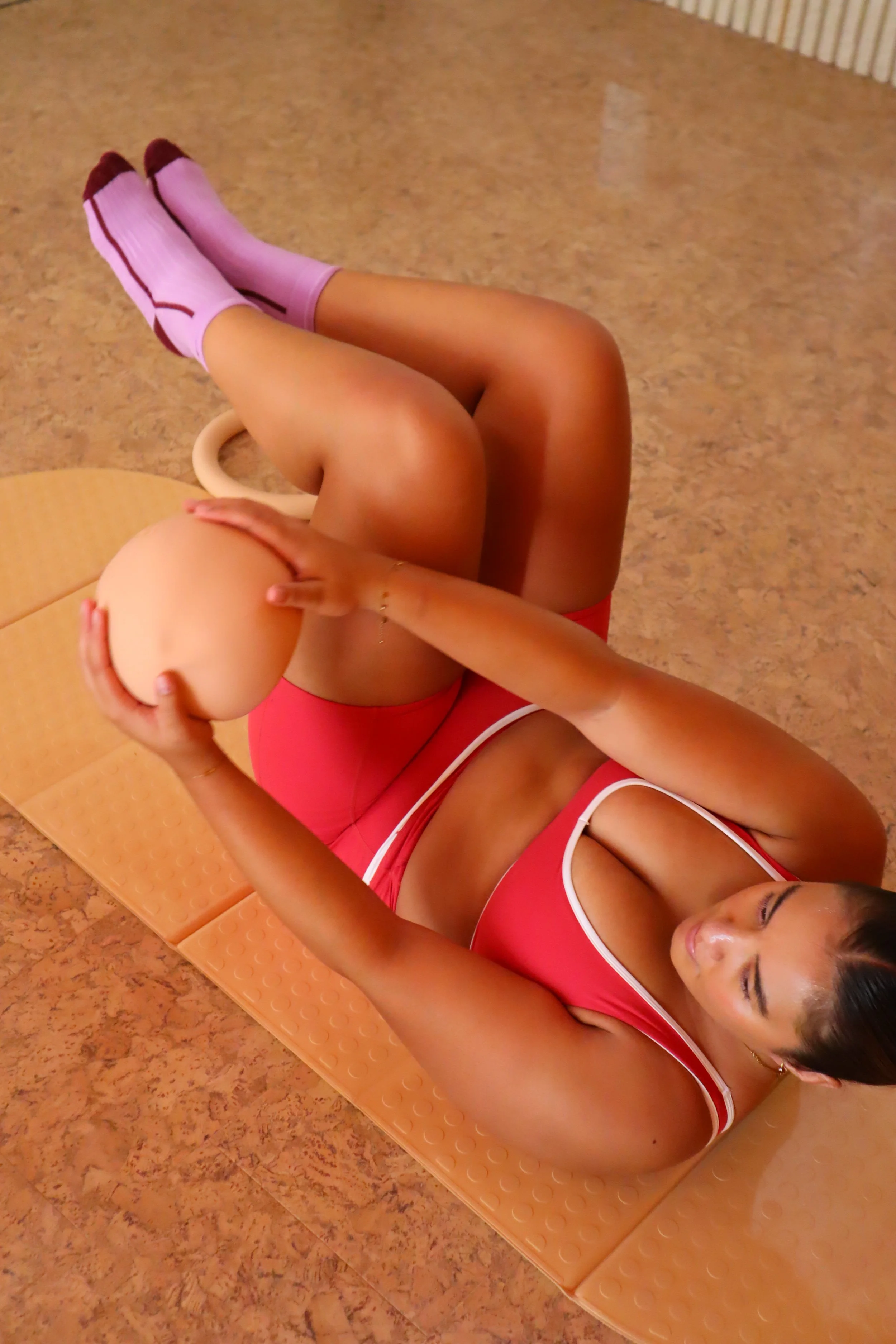
Why Choose Nuvra
Comprehensive Education
Balanced focus on anatomy, programming, injury prevention, pregnancy, and progression.
Theory meets practice; with online learning and immersive in-person training.
Modern Meets Classical
A refreshing, contemporary approach rooted in traditional Pilates principles.
Designed for today’s clients and the next generation of instructors.
Personalised, Supportive Learning
Small groups for individual feedback and guidance.
Support beyond the course continued access to your online theory and a growing community.
Optional post course Mentoring to elevate your teaching and get you up to speed for your first in studio teaching job.
About Kira — Founder & Course Creator
With over 17 years in the fitness industry and 10 years dedicated to Pilates, Kira has built a reputation for combining deep technical knowledge with a modern, intuitive approach to movement. She has spent the past three years teaching Pilates instructor courses, helping future teachers develop not only skill, but confidence and clarity in their craft.
After years of working across fitness and Pilates education, Kira saw a clear gap in the industry where traditional courses were still rooted purely in the classical repertoire, while studios and clients were moving toward a more contemporary, functional, and evidence-based style of training. That’s where Nuvra was born.
Drawing from her background in strength and conditioning, group fitness, and comprehensive Pilates teaching, Kira developed the Nuvra Method; a training approach that bridges classical precision with modern movement principles. Her mission is to guide instructors to think beyond choreography, to truly understand the human body, and to teach in a way that’s intelligent, adaptable, and aligned with today’s Pilates landscape.
At the heart of her teaching is a passion for empowering others - helping each student find their own teaching voice, connect deeply to the work, and step confidently into their role as a modern Pilates professional.
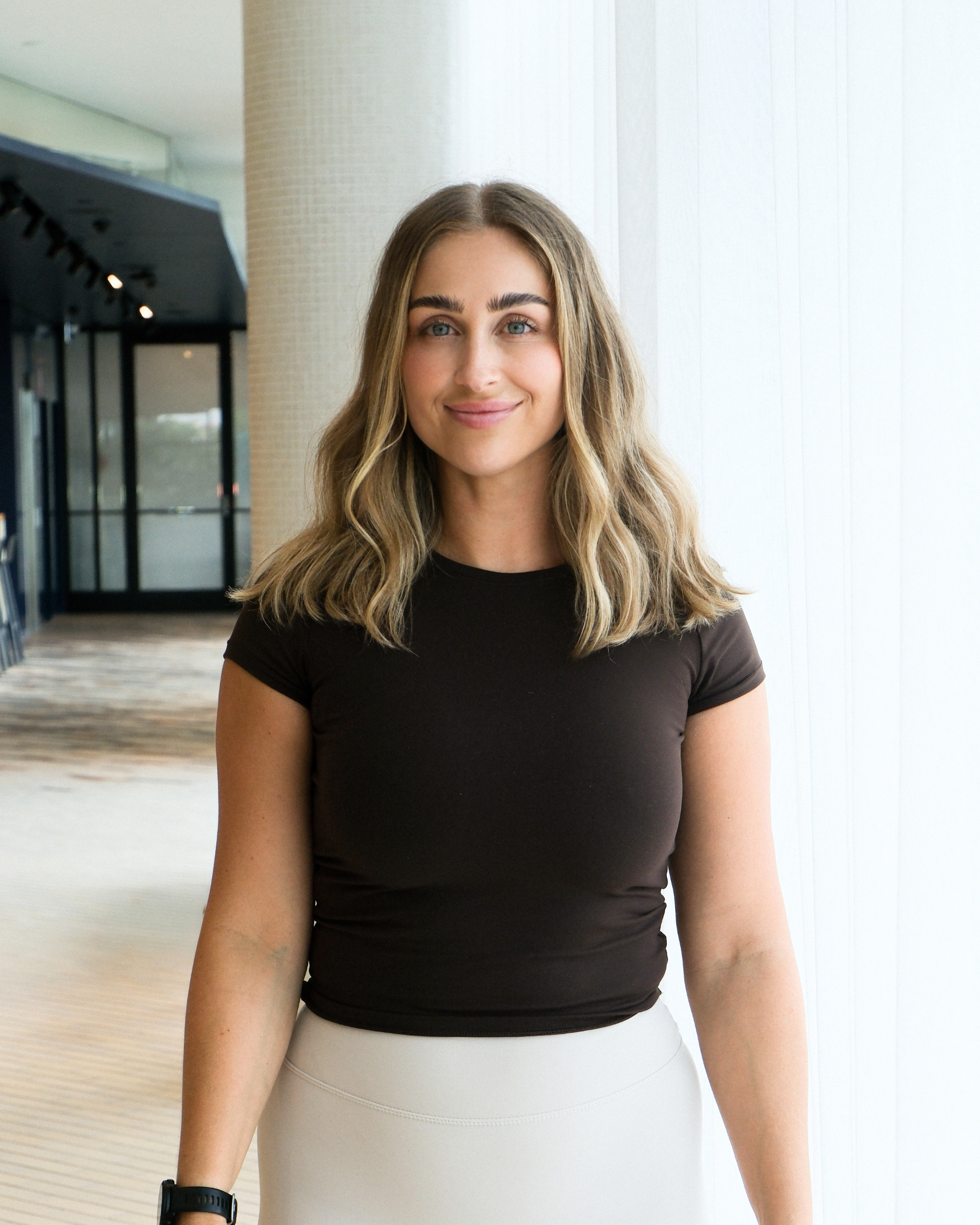
Do I Need Accreditation to Teach Pilates?
This is one of the questions we get asked more than almost anything else, so let's talk through it properly.
The short answer is no, not in the way most people imagine. There is no global body that oversees Pilates. Nobody sets the rules for what a course has to cover, and no country actually requires you to be "accredited" by anyone before you can teach. Pilates, almost everywhere in the world, is unregulated.
That word can sound alarming, so let's break down what it actually means.
So what is accreditation, really?
Accreditation companies are independent fitness businesses. They are not government departments, they are not created by any government, and they have no legal power over who is or isn't allowed to teach.
What they actually do is build a framework, a checklist of what a good course should include, and then education providers (like us) pay them to review our courses against that checklist and put their name behind it.
That's genuinely all it is. It's a private company saying "we've checked this course and it meets our standard," not a government saying "this is legally required to teach."
Why do education providers bother getting accredited, then?
Trust, mostly. When a student sees a recognised accreditation logo, it gives them confidence that a course has been reviewed by someone outside the business running it. And when a studio is deciding who to hire, seeing that same logo makes the decision feel a little safer too.
There is real value in that. It's just not a legal requirement, and it doesn't automatically mean the course itself is brilliant. More on that below.
What does "globally recognised" actually mean?
It just means a certification is accepted by insurers and employers in more than one country. It doesn't mean it's been approved by some kind of world authority, because that authority simply doesn't exist. A "globally recognised" certificate can still come from a small, independent company. It just means enough insurers and studios around the world are comfortable accepting it.
So what would a studio owner actually be checking? Say you owned a studio in Spain or Germany and someone applied to teach with a certificate you'd never heard of. You wouldn't be checking for a magic logo. You'd realistically be looking at things like:
How many training hours it involved. A weekend course and a genuinely comprehensive certification (often several hundred hours once you include theory, observation and practice teaching) are very different things, even if both hand out a "certificate" at the end.
Whether it covered real anatomy and theory, not just choreography, so the instructor understands why an exercise works and who it isn't suitable for.
Whether there were supervised or observed teaching hours, not just self-practice, because teaching a room full of people is a different skill to doing the exercises yourself.
Whether there was an actual assessment, written and practical, rather than a certificate that's handed out simply for attending.
That's really what "recognised" comes down to almost everywhere. It's less about which company's name is on the certificate, and more about whether the training behind it was genuinely thorough.
What you actually need, country by country
Here's the part that matters most practically: whether you can get insured. In almost every country, this comes down to holding a legitimate, substantial qualification, not a specific accreditation stamp.
Australia No law requires a licence to teach here. To get insured, you simply need a Pilates qualification behind you. That's really it.
United Kingdom Not a legal requirement, but insurers here are a little more specific about what they'll accept than in most other countries. There are two main routes that work: a UK-regulated Level 3 qualification, or a comprehensive, internationally recognised training programme. Insurers generally accept either path, which is why you'll see UK instructors teaching confidently without a UK-specific Level 3, as long as their training was substantial and came from a properly recognised provider.
Europe Across most of Europe, this is one of the loosest corners of the industry. In places like Germany, Spain and Italy, "Pilates teacher" isn't even a protected title, and there's no legal qualification needed. It runs almost entirely on trust and private certifications, similar to the UK and US.
France is the exception to know about. It's the only country here where teaching for payment is genuinely a legal matter, not just an insurance one. There's still no Pilates-specific state diploma, but French law requires a recognised sport qualification (like the BPJEPS AF or a CQP) before you can be legally paid to teach. A regular Pilates certificate alone won't cut it there.
United States No state or federal law requires certification, so it's entirely self-regulated. That said, studios, gyms and insurers will almost always expect a recognised certification before they'll take you on, so it works like a requirement in practice, even if it isn't one on paper.
Asia (using Singapore as an example) Much the same story: no national regulation, no legal requirement to be "registered." Studios and insurers still want to see a recognised certification, and if you're hoping to teach internationally one day, a certification linked to a well-known body will travel with you more easily.
Here's the bit we really want you to take away
Accreditation is a good sign. It means a course has been reviewed by another fitness body against a set of standards, and that's genuinely worth something. But it's not the only thing worth choosing a course on, and it's not something you need to feel anxious about chasing.
The other factors matter just as much: how experienced the educators actually are, what real students say about their experience, and how much genuine teaching practice and support you get along the way. A course can tick the accreditation box and still fall short in those areas, so it's worth weighing all of it together rather than looking for one badge to make the decision for you.
1. Who is this training for?
Answer: Our Mat & Reformer Instructor Courses are designed for aspiring Pilates teachers and fitness professionals who want to go beyond simply teaching classical repertoire, to really understand human movement principles, apply them practically, and deliver a modern, results-driven Pilates offering. No prior Pilates instructor certification is required; you just need a movement background or strong interest in becoming an instructor.
2. What are the prerequisites?
Answer: For both the 4-day in-person courses (Mat and Reformer) we require you to complete 50 hours of pre-course online theory. This gives you anatomy, movement science and foundational programming knowledge ready for the in-studio intensive. There’s no formal requirement for you to have worked as a Pilates instructor before, though any movement or fitness experience will be a benefit. You’ll also need to complete observation and participation hours as part of your self mastery.
3. How are the courses structured?
Answer: Each course is a four-day in-person intensive (Hands-on teaching, cueing, programming, movement practice). Prior to that you complete 50 hours of online theory that covers anatomy, biomechanics, injury prevention, pregnancy considerations, and modern vs classical Pilates methods. The in-person portion brings that theory alive through practical sessions, movement labs, cueing practice, and instructor application.
4. What if I’ve only done classical Pilates training previously - can I still enroll?
Answer: Absolutely. In fact, we often welcome students who already have a classical base but want to evolve their teaching style into something more contemporary, movement-based and client-relevant. The Nuvra Method is built to bridge that gap between classical technique and modern application.
5. How much anatomy/movement science is included?
Answer: A significant component. We believe that to teach with confidence and credibility you must understand the why behind every movement, cue, and sequence. That’s why the pre-course theory includes anatomy, biomechanics, programming logic, injury prevention and pregnancy/holistic contexts. Then in person we apply it to real teaching and class design.
6. What’s the difference between the Mat course and the Reformer course?
Answer: The Mat course focuses on teaching movement on the mat - body weight, small apparatus and foundational Pilates programming, blending classical Pilates roots with modern movement principles. The Reformer course takes you into apparatus teaching - springs, pulleys, boxes, advanced cueing, programming and client-specific adaptations. Many students complete both to deepen their skillset.
7. What does my Nuvra certificate actually get me?
Answer: A qualification that's been mapped against both Australian and international standards from the ground up, not built to scrape by on the minimum. You'll graduate with the anatomy, theory and real teaching practice behind you to walk into any studio as a fully fledged Pilates instructor, in Australia or anywhere else you decide to take it.
8. Can I complete the theory portion at my own pace?
Answer: Yes, the 50-hour online theory is self-paced within a set timeframe (we’ll specify on enrolment). It must be completed before your in-person 4-day session so you arrive prepared and ready to get the most from the live training.
9. What support do I receive after the course?
Answer: At Nuvra you don’t just leave with a certificate and figure it out alone. You will receive ongoing support: access to the online theory modules post-course, teaching resources/templates, join our instructor community, and you can reach out for mentorship or follow-up questions as you step into teaching.
10. What if I’m pregnant or want to teach pre/post-natal clients?
Answer: Our curriculum covers pregnancy and injury-prevention considerations in both courses. You’ll learn how to safely program and cue clients who are pregnant, post‐natal or managing injuries. That said, every client context is unique, we encourage you to always screen, consult with health professionals when needed, and adapt accordingly.
11. Payment options & cancellation/rescheduling policy
We believe the investment in your education shouldn't be a barrier to getting started. That's why we offer fully flexible, in-house payment plans tailored to your individual circumstances.
Here's how it works: pay a deposit to secure your enrolment and you'll receive immediate access to your online theory modules so you can get started right away. From there, choose to pay any amount you like - weekly, fortnightly or monthly - until your balance is paid in full. There are no set instalments and no pressure. Your Nuvra Instructor Certificate will be issued upon completion of the course and full payment of your plan.
To discuss a payment plan, get in touch and we'll work something out together.
As for rescheduling - life happens. We're happy to reschedule your course up to 12 months from your original booking. Just reach out and let us know.
12. What makes Nuvra different from other Pilates teacher training courses?
Answer: In a nutshell; we bridge the gap between classical and contemporary. Many courses focus purely on the traditional Pilates repertoire and stop there; studios and clients today expect more - that intelligent movement, functional applications, varied modern clients, online/streamed classes, pregnancy/injury adaptations, emphasizing programming not just exercise stacks. With Nuvra you get the anatomy + programming + movement science + Pilates technique all aligned to the modern client and teaching environment.
13. Where are courses held?
In-person courses currently run in Brisbane, Adelaide, Sunshine Coast and Bali. We're excited to be expanding soon with dates planned for Sydney, Melbourne and the Gold Coast. If your city isn't listed yet, get in touch or follow us on Instagram to be the first to know when new locations are announced.